

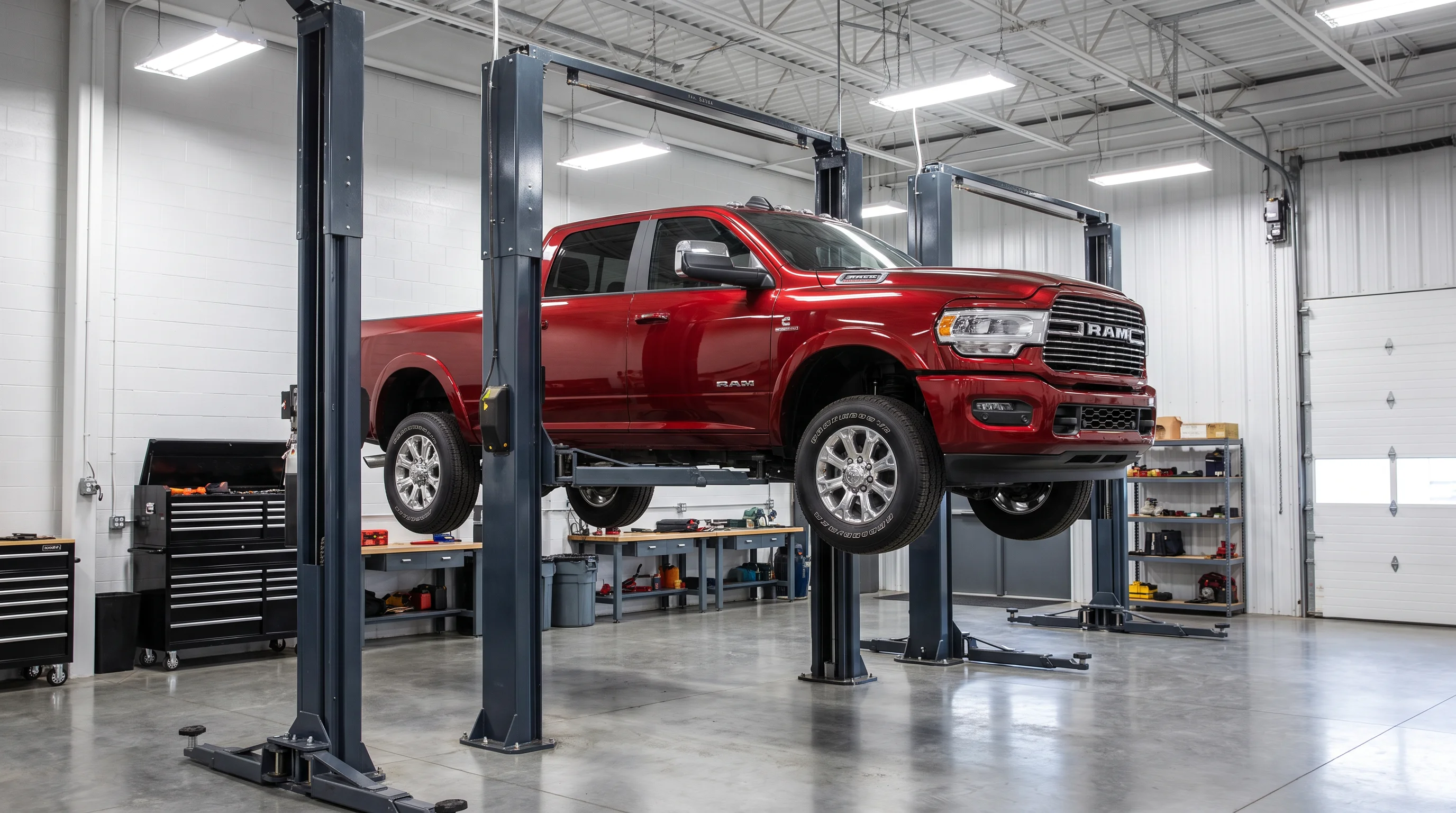
How to Drain the Fuel-Water Separator on a Ram Cummins Diesel
To drain the fuel-water separator on a Ram 2500 or 3500 with the 6.7L Cummins turbo diesel, park on level ground, set the parking brake, and shut the engine off. Open the drain valve at the bottom of the separator housing. Let the contaminated fuel run into a catch container until clean diesel flows, then close the valve hand-tight.
Two things trip most owners up. First, Ram's owner's manual tells you to drain water from both fuel filters, not just one. Second, where those filters live depends on your model year. Trucks from 2013 through 2024 carry a water separator on the frame rail under the truck. Trucks from 2025 on carry both filters under the hood.
After draining, prime the system by cycling the ignition to RUN before you crank the engine.
What the Fuel-Water Separator Does on a Ram Cummins
Water is the primary enemy of a high-pressure common-rail diesel injection system. It corrodes injectors. It causes cavitation wear. It strips the lubrication out of pumps built to extremely tight tolerances. The fuel-water separator exists to pull that water out of the fuel before it ever reaches the engine.
Every 6.7L Cummins Ram HD uses two filtration stages, not one. The primary stage separates free water and catches larger debris. The secondary stage handles fine particulate filtration right before the fuel reaches the high-pressure pump.
Separation works on density. Diesel is lighter than water. Moisture settles into a collection area at the base of the filter housing, and a sensor tracks how much has built up.
Knowing the layout helps you avoid the most common mistake in diesel fuel maintenance: servicing only one filter. Leave a saturated filter in place while installing a fresh one, and the whole system is back to a single line of defense.
Which Fuel Filter Layout Does Your Ram Have?
This is the first thing to sort out, because Ram changed the layout for the 2025 model year. Check your model year before you go looking for a filter.
| 2013–2024 | 2025–2026 | |
|---|---|---|
| Primary water separator | Mounted under the body, in front of the rear axle, above the driveshaft | Under the hood, toward the firewall |
| Secondary filter | Under the hood, driver's side of the engine | Under the hood, alongside the primary |
| How you access them | One from underneath the truck, one from the engine bay | Both from the engine bay, no crawling required |
| Water drain valves | One on each filter | One at the bottom of each housing |
| Service interval | 15,000 miles or 12 months | 15,000 miles or 12 months |
2013–2024: separator on the frame rail
On these trucks the primary water separator is a canister mounted under the body, forward of the rear axle and above the driveshaft. The manual does not say which frame rail it sits on, and aftermarket sources disagree, so locate it by position rather than by side. Chassis cab models place it differently than pickups do.
Three things sit at the bottom of that canister. A hand-operated drain valve. An integrated Water in Fuel sensor. And a drain nipple sized to take a flexible hose, which keeps the job cleaner. The second filter lives under the hood on the driver's side of the engine.
2025–2026: both filters under the hood
Ram consolidated the system for 2025. There is no longer a separator on the frame rail. Both filter housings now sit in the engine bay, set back toward the firewall, and both are serviced from above. Each housing has its own drain valve at the bottom.
If you own a 2025 or 2026 truck and you have been crawling underneath looking for a frame-rail filter, that is why you cannot find it. The parts also do not interchange between the two layouts, so confirm your model year before ordering anything.
What both layouts share
| Primary stage (water separator) | Secondary stage (fine filter) | |
|---|---|---|
| Primary job | Separating free water and capturing larger debris | Fine particulate filtration before the high-pressure pump |
| Filtration rating | 5 micron | 3 micron, NanoNet synthetic media |
| Water drain valve | Yes | Yes |
| Water in Fuel sensor | Yes | — |
| Serviced | Together, on the same interval. Never one without the other. | |
What the Water in Fuel Warning Light Means on a Ram Truck
The Water in Fuel indicator is an amber warning in the instrument cluster. Many trucks pair it with a driver-display message telling you to drain the fuel filters. It lights up when water in the separator housing reaches the sensor contacts.
What the chime count tells you
The number of chimes tells you what kind of problem you have. Ram's owner's manual distinguishes two cases.
| What you hear | What it means | What to do |
|---|---|---|
| Light plus five chimes | Water has been detected in the separator | Stop the engine. Drain the water from both filters. |
| Light plus one chime | A problem with the water separator wiring or the sensor, not necessarily water in your fuel | See an authorized dealer for service. |
The manual is direct about the risk. If the indicator stays on, do not start the engine. Drain the water from the fuel filters first, or you risk engine damage.
How the sensor works
The sensor works on electrical conductivity. Ultra-low-sulfur diesel is an insulator, so current cannot pass through clean fuel. Water conducts. Water settles to the bottom of the housing and rises. Once it covers both sensor contacts, the circuit closes and the warning triggers. This is also why moisture on damaged sensor wiring can trip a false warning.
What happens after you drain
After you drain both filters properly, the light stays on for roughly ten seconds, then goes out. If you drained with the engine running, expect about three minutes.
The information in this article is general guidance and does not constitute a specific diagnostic or repair recommendation for any individual vehicle. Repair and maintenance decisions should be made in consultation with a certified technician based on the specific condition of your vehicle.
Tools and Safety Precautions Before You Start
You need very little equipment. A short length of clear flexible tubing. A clean fuel-safe catch container. Nitrile gloves and safety glasses. No specialized hand tools are needed, because the drain valve is built to turn by hand.
Before you start, observe these precautions.
- Engine off. Ram's manual warns against draining the fuel/water separator while the engine is running. Shut the engine down. Keep the key fob out of the truck so the electric lift pump cannot cycle while the drain is open.
- Let it cool. Give the engine bay and exhaust components time to cool before working near them.
- No sparks or open flames. Diesel and diesel vapor can ignite near heat sources. Keep the workspace ventilated and clear of grinding equipment and pilot lights.
- Protect your eyes and skin. Wear solvent-resistant gloves and safety goggles. Diesel causes skin irritation and significant eye discomfort on contact.
- Mind the surface. Diesel fuel damages asphalt paving. Drain into an appropriate container rather than onto the driveway.
Owners on dirt roads or off-grid property out in Homestead Valley should keep a simple kit in the truck. A short length of clear hose and a sealable jug is enough. That lets you drain the separator anywhere without spilling fuel on the ground. Capture whatever comes out and dispose of it at an authorized recycling facility or automotive center.
How to Drain and Prime the Fuel System on a 6.7L Ram Cummins
Draining a frame-rail separator (2013–2024)
- Park on level ground, set the parking brake, and turn the engine off.
- Locate the separator under the body, forward of the rear axle and above the driveshaft.
- Attach a short length of clear hose to the drain nipple at the bottom of the canister. Run it into a clean catch pan.
- Open the drain valve by hand.
- Let the accumulated water and cloudy fuel drain out. If flow stops before clean fuel appears, close the drain, cycle the ignition to RUN briefly to run the lift pump, then reopen it. Gravity alone often will not empty the housing.
- Once clear, uncontaminated diesel flows steadily, close the valve hand-tight.
Draining an engine-mounted filter
Every layout has at least one filter under the hood, and every one of those housings has its own drain valve at the bottom. On 2025 and newer trucks, both filters are here.
Work from the engine bay and repeat the same sequence. Attach a hose, open the drain into a container, and close it once clean fuel runs. Fuel comes out with more force here than at the rear, so position the container before you open the valve. Pack rags around the area first if space is tight.
Draining only one filter leaves water sitting in the last component before the high-pressure pump. That is the opposite of what this maintenance is for.
Replacing the filters at the service interval
Ram specifies replacing the fuel filters every 15,000 miles or 12 months, whichever comes first, or promptly after a fuel filter service or water in fuel message appears. When you do the full service:
- Remove both filter cartridges. On 2013–2024 trucks that means one underneath and one in the engine bay. On 2025 and newer trucks both come out from above.
- Wipe the housing mounting surfaces and sensor bores clean with a lint-free cloth.
- Lubricate the new O-rings with a light film of clean diesel before installing. Replace every O-ring, because reusing old seals risks leaks under pressure.
- Install the new OE-spec filters until the gaskets contact the mounting base, then tighten by hand per manufacturer specifications.
Priming the fuel system
Opening a drain valve or changing a filter lets air into the fuel lines. Priming is mandatory before you try to start the engine. The 6.7L Cummins uses an electric in-tank lift pump, so priming needs no tools. It just needs patience with the ignition.
- Turn the ignition to RUN without cranking or starting. On push-button trucks, this means pressing START without the brake pedal down.
- Leave it in RUN for about 30 seconds. You will hear the lift pump running as it pushes fuel forward and purges air.
- Turn the ignition off.
- Repeat this cycle 10 to 12 times. This is the step most people cut short, and cutting it short is what produces extended cranking or a no-start.
- Press the brake and crank the engine. Let it idle for a minute while you check the filter bases for leaks.
If you are replacing both filters, prime between them rather than only at the end. Priming after the first filter goes in leaves less air in the system when you reach the second. It also traps any contamination from the first change in the filter you are about to replace.
Service specifications at a glance
| Item | Specification |
|---|---|
| Filter replacement interval | 15,000 miles or 12 months, whichever comes first |
| Filters replaced per service | Both, always together |
| Drain trigger | Water in Fuel light with five chimes, or at each filter change |
| Ignition prime cycles | 10 to 12 |
| Prime hold time per cycle | About 30 seconds in RUN, engine off |
| Warning light after a successful drain | About 10 seconds, or about 3 minutes if drained while running |
| Tools required | None. Drain valves turn by hand. |
The information in this article is general guidance and does not constitute a specific diagnostic or repair recommendation for any individual vehicle. Repair and maintenance decisions should be made in consultation with a certified technician based on the specific condition of your vehicle.
Common Questions About Ram Cummins Fuel-Water Separators
Does my 2025 or 2026 Ram still have a frame-rail fuel filter?
No. Ram redesigned the fuel filtration system for the 2025 model year and moved both filters into the engine bay, set back toward the firewall. There is no longer a water separator mounted on the frame rail. Both housings are serviced from above, and each one has its own drain valve at the bottom. The filters also do not interchange with the 2013 through 2024 parts, so confirm your model year before ordering anything.
How often should the fuel filters be replaced on a 6.7L Cummins diesel?
Ram specifies replacing the fuel filters every 15,000 miles or 12 months, whichever comes first, and promptly after a fuel filter service or water in fuel message. Both filters are replaced together, never one without the other. If you tow heavily, idle for long stretches, or buy fuel from stations of uncertain quality, servicing them more often is reasonable insurance.
Can you drive a Ram Cummins truck while the Water in Fuel light is on?
No. Ram's owner's manual instructs you to stop the engine and drain water from both filters when the indicator comes on with five chimes, and warns against starting the engine again before you do. Continuing to drive risks pushing free water past the filter media into the high-pressure pump and injectors, which leads to severe pump wear, metal contamination, and expensive fuel system repairs. If the light comes on with a single chime instead, that suggests a sensor or wiring problem and should be diagnosed by a dealer.
Do I need special hand tools to open the fuel-water separator drain valve?
No. The drain valve on a Ram Cummins fuel-water separator is designed to be operated by hand, with no specialized tools required. Attaching a short length of flexible tubing to the drain nipple helps guide what comes out into a catch container instead of onto the ground.
Why does a 6.7 Cummins crank a long time or stall after a fuel filter change?
Extended cranking or stalling immediately after filter service is almost always trapped air in the fuel lines or filter housings. The usual cause is an incomplete priming sequence. Ten to twelve ignition cycles are typically needed to purge the air and rebuild fuel pressure, because a few cycles is not enough and the fuel system will struggle until the lift pump clears the circuit.
The information in this article is general guidance and does not constitute a specific diagnostic or repair recommendation for any individual vehicle. Repair and maintenance decisions should be made in consultation with a certified technician based on the specific condition of your vehicle.
Schedule Diesel Service at Joshua Tree CDJR
Keeping both filtration stages in good order is what protects the 6.7L Cummins over the long haul. Maybe your truck is due for its 15,000-mile service. Maybe you have a Water in Fuel light that will not clear after draining. Maybe you have a 2025 truck and would rather have someone who has already done the new layout handle it. Either way, our service department handles diesel maintenance in Yucca Valley.
Our technicians use genuine Mopar and OEM-spec Fleetguard filters built to manufacturer specifications. Check current service specials before your visit. You can also browse our other service and parts tips for more maintenance guidance.
Disclaimers
The information in this article is general guidance and does not constitute a specific diagnostic or repair recommendation for any individual vehicle. Repair and maintenance decisions should be made in consultation with a certified technician based on the specific condition of your vehicle.