

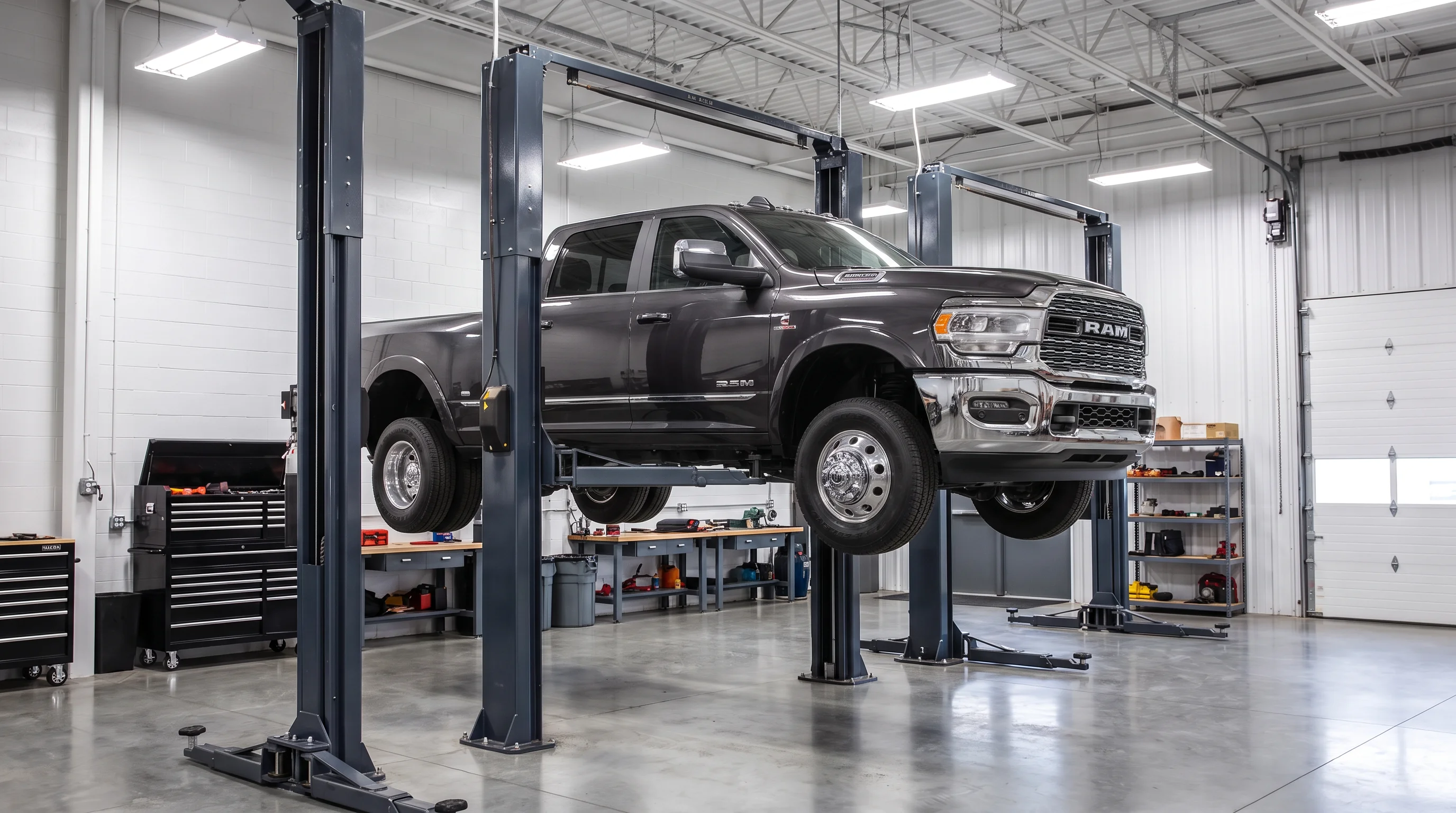
Ram Cummins Severe-Duty Maintenance for High Desert Driving
Severe driving conditions for a Ram diesel truck include sustained high ambient heat, frequent driving on dusty or unpaved roads, hauling heavy trailers, extended idling, and repeated short trips that never let the engine fully warm up. In the high desert, these conditions accelerate engine oil oxidation, load filtration media faster, and push cooling systems harder, which calls for shorter service intervals than the standard factory schedule assumes.
Standard manufacturer intervals assume moderate ambient temperatures, light payloads, and sustained highway speeds that allow full engine warm-up and passive exhaust aftertreatment regeneration. Heavy-duty trucks working in arid regions rarely see those conditions. Prolonged heat drives thermal degradation of engine oil and transmission fluid, while airborne sand and microscopic quartz silt reach the intake far faster than they would in a humid climate.
For owners hauling commercial payloads or towing recreational trailers up sustained grades in high ambient heat, the cooling system, turbocharger, and transmission all operate near their thermal limits at once. Under that kind of load, engine oil temperatures climb, fuel density drops, and the exhaust aftertreatment system cycles more often to manage soot accumulation.
Operating this way means shifting off the standard schedule and onto a severe-duty maintenance strategy. Ignoring the difference leads to premature bearing wear, clogged injectors, restricted air filtration, and reduced turbocharger efficiency. To review your truck's service history or build a severe-duty plan around how you actually drive, stop by our Yucca Valley service center or call our Mopar-certified service team.
Desert Dust Loading Makes Air Filter Discipline Critical
Fine desert dust carries microscopic silica particles that behave like abrasive grit once they reach the combustion chamber. When dust gets past a loaded or compromised air filter, it scores cylinder walls, erodes the turbocharger compressor wheel, and contaminates engine oil. The air filter element is the only thing standing between that dust and the engine, which is why inspection discipline matters more in this climate than almost anywhere else.
Driving unpaved desert access roads in Homestead Valley kicks up airborne dust continuously, and a filter that would last a full interval on pavement can load up in a fraction of that time. The factory guidance for trucks operated in dusty or off-road conditions is to inspect the engine air filter at every service visit rather than waiting for a mileage number, and to replace it whenever it is visibly loaded. Under normal conditions replacement typically falls somewhere in the 15,000 to 30,000 mile range. In sustained dust, it comes sooner, and the filter itself tells you when.
Heat and Dust Shorten Oil and Fuel Filter Intervals
High ambient heat shortens fluid life and airborne dust accelerates filter restriction, so the intervals that govern a Cummins in mild conditions do not apply here. For the full breakdown of factory intervals, oil specifications, and DEF service, see our guide to Ram 2500 Cummins diesel service. What follows is the severe-duty difference.
Under normal use, Ram calls for engine oil and filter service up to every 15,000 miles or 12 months, managed by the truck's oil change indicator system. Severe-duty operation tightens that ceiling to 7,500 miles regardless of what the indicator shows, and under the most demanding combination of heavy dust and extended idling, oil and filter changes may be warranted as often as every 4,000 miles. Shorter intervals limit soot loading and oil dilution before they reach the valve train.
The 6.7L Cummins takes 12 quarts of oil with a filter change, which is roughly three gallons. For sustained high-temperature operation, a full synthetic SAE 5W-40 heavy-duty engine oil meeting API CK-4 maintains film strength and resists thermal breakdown better than a conventional formulation.
One viscosity is off the table entirely. Stellantis Technical Service Bulletin 09-013-23 states that 15W-40 cannot be used in any 2019-or-newer 6.7L Cummins, because the redesigned valvetrain's hydraulic lash adjusters form deposits on it, leading to noise or engine damage. If your truck is a 2019 or later, read the jug before it goes in.
| Service Item | Normal-Duty Interval | High-Desert Severe-Duty Interval |
|---|---|---|
| Engine oil and filter | Up to 15,000 miles or 12 months, per the oil change indicator | 7,500 miles maximum; as often as 4,000 miles in heavy dust or extended idling |
| Both fuel filters | 15,000 miles or 12 months | 7,500 to 10,000 miles |
| Engine air filter | Inspect at each service; replace roughly every 15,000 to 30,000 miles | Inspect at every service visit and after heavy dust exposure; replace when visibly loaded |
| Cabin air filter | Every 20,000 to 30,000 miles or every 2 to 3 years | Toward the short end of that range |
Fuel filtration deserves the same attention. The Ram heavy-duty fuel system uses two filters working in series: a chassis-mounted primary that handles water separation, and an engine-mounted secondary that performs final fine filtration immediately before the fuel reaches the high-pressure pump and injectors. Peak injection pressure in this system runs near 29,000 psi, and at that pressure a small amount of particulate contamination or water pass-through can ruin pump surfaces and injector nozzles quickly.
Ram specifies replacing both filters every 15,000 miles or 12 months under normal conditions. Towing heavy, running dusty, or burning higher biodiesel blends pulls that in to the 7,500 to 10,000 mile range. Replace them as a pair so the low-pressure feed to the high-pressure pump stays clean.
Extreme Heat Reduces Power, and Maintenance Restores It
Ram Cummins diesels lose power in extreme heat because hot air is less dense, charge-air temperatures climb, and the engine control module protects itself by managing exhaust gas temperature. Restricted air or fuel filters, intercooler heat soak, and soot-clogged turbocharger vanes compound the loss. Routine preventive maintenance brings the output back.
Air density falls about 1.8 percent for every 10 degrees Fahrenheit of ambient temperature rise, so the air entering the intake on a 105-degree afternoon carries meaningfully less oxygen per cubic foot than it does on a 65-degree morning. The turbocharger compresses that already-hot air, pushing charge temperatures higher still. The intercooler works to strip that heat back out, but when the air moving across its fins is over 100 degrees, transfer efficiency drops. The engine control module manages exhaust gas temperature to keep the engine inside safe limits, and the driver feels that as reduced pulling power under heavy throttle.
Several mechanical conditions turn ordinary atmospheric power loss into a real performance problem:
- Restricted air filters cut the total air mass reaching the turbocharger compressor and raise charge temperatures.
- Restricted fuel filters starve the high-pressure pump, causing rail pressure to drop and the engine to hesitate under load.
- Soot buildup on the variable geometry turbocharger's sliding nozzle ring causes the vanes to stick, preventing full boost from building.
- Hairline cracks in rubber intercooler hoses open up under engine bay heat and create boost leaks under heavy load.
Preventing heat-related power loss takes work before summer, not during it. Inspect intercooler boots for cracks, clear dust from the radiator and charge-air cooler fins, replace fuel filters ahead of towing season, and confirm the cooling system is holding correct fluid levels.
One more habit costs nothing: use the exhaust brake regularly. Cycling the vanes keeps the surface of the sliding nozzle ring clean and is the most effective way to slow the soot buildup that causes them to stick in the first place.
Some Cummins Maintenance Is Owner-Friendly, and Some Belongs in the Shop
Owners comfortable with basic hand tools can handle engine air filter replacement, cabin air filter swaps, purging the water-in-fuel bowl, and routine fluid level checks. Dual fuel filter replacement, transmission fluid service, and electronic module diagnostics call for Mopar tooling and technician expertise, where the cost of getting it wrong is fuel system contamination or a warranty dispute.
Work that stays in the driveway
- Engine air filter. Unclamp the intake housing, inspect the pleated element for fine dirt loading, and swap it. Do not use compressed air to blow out a disposable paper filter. The pressure tears the filter fibers and lets unfiltered dust straight into the intake.
- Cabin air filter. The filter sits behind the glove box and is typically replaced every 20,000 to 30,000 miles or every two to three years, toward the short end of that range in heavy dust. It keeps HVAC airflow up and airborne dust out of the cabin.
- Water-in-fuel drain. Turning the petcock drain valve on the chassis-mounted filter housing purges accumulated water into a clean container and keeps moisture out of the fuel system.
Work that belongs on a lift
Replacing the engine-mounted fuel filter demands cleanliness precise enough to keep debris off the clean side of the fuel rail. Draining and refilling 12 quarts of oil requires proper high-capacity disposal and exact drain plug torque. Resetting electronic maintenance monitors and performing a stationary diesel particulate filter regeneration are scan-tool procedures run on dealer equipment.
Documentation matters too. Ram's base powertrain coverage runs five years or 100,000 miles on diesel engines. For 2026 model year trucks, Ram extends powertrain coverage to 10 years or 100,000 miles for the original owner only, reverting to the standard term for any subsequent owner. Service records from a certified technician are what protect either one when a claim is filed.
This information is provided for general educational purposes only and does not constitute legal advice. Warranty coverage depends on the specific terms of your vehicle's warranty agreement. Consult your owner's manual or a qualified legal professional for guidance on your individual situation.
Frequently Asked Questions About Ram Cummins Desert Maintenance
What viscosity oil should be used in a Ram Cummins during hot summer months?
A full synthetic SAE 5W-40 heavy-duty engine oil meeting API CK-4 is well suited to high desert summer operation. Synthetic formulations hold protective film thickness and resist thermal oxidation when ambient temperatures climb past 100 degrees, which protects turbocharger bearings and internal engine components better than conventional oil does.
How often should the coolant system be serviced on a Ram Cummins truck?
Ram specifies Mopar Antifreeze/Coolant 10 Year/150,000 Mile Formula OAT, an organic additive technology coolant rated for up to 10 years or 150,000 miles before replacement. In severe high-heat desert service, an annual visual check of coolant level, hose condition, and radiator core cleanliness is worth doing between those long intervals.
Does towing heavy trailers change the transmission service schedule?
Yes. Towing near the Ram 2500's maximum available diesel rating of 20,000 pounds qualifies as severe service. Under continuous heavy towing or sustained high-temperature operation, heavy-duty automatic transmission fluid service is recommended at 60,000 miles rather than the longer light-duty interval.
Maximum towing and payload capacity figures are based on properly equipped vehicles and vary by configuration. Do not exceed any weight rating. See your owner's manual and the vehicle's door-jamb label for specific capacities.
Why is draining water from the fuel filter separator critical in desert climates?
Large swings between hot days and cool nights drive moisture condensation inside both vehicle and bulk fuel storage tanks. If water gets past the separator and into the high-pressure common rail system, it damages injector tips and high-pressure pump surfaces. Draining the separator on a regular schedule prevents that.
Protect Your Cummins Through Desert Summers
Keeping a Ram Cummins healthy under severe high desert conditions comes down to shortened fluid intervals, frequent filtration checks, and certified care. Address intake dust loading, ambient heat stress, and fuel cleanliness before they turn into symptoms, and the truck keeps delivering the torque and towing performance it was built for.
Whether your truck is due for a dual fuel filter replacement, a pre-summer cooling system inspection, or a full synthetic oil change, our Mopar-certified technicians at Joshua Tree Chrysler Dodge Jeep Ram have the tools and Mopar parts to keep your diesel running strong.
Ready to get ahead of summer? More maintenance guidance for your truck lives in our Service & Parts Tips hub, and our oil change service page covers what a routine visit includes.
Disclaimers
Maximum towing and payload capacity figures are based on properly equipped vehicles and vary by configuration. Do not exceed any weight rating. See your owner's manual and the vehicle's door-jamb label for specific capacities.
This information is provided for general educational purposes only and does not constitute legal advice. Warranty coverage depends on the specific terms of your vehicle's warranty agreement. Consult your owner's manual or a qualified legal professional for guidance on your individual situation.