
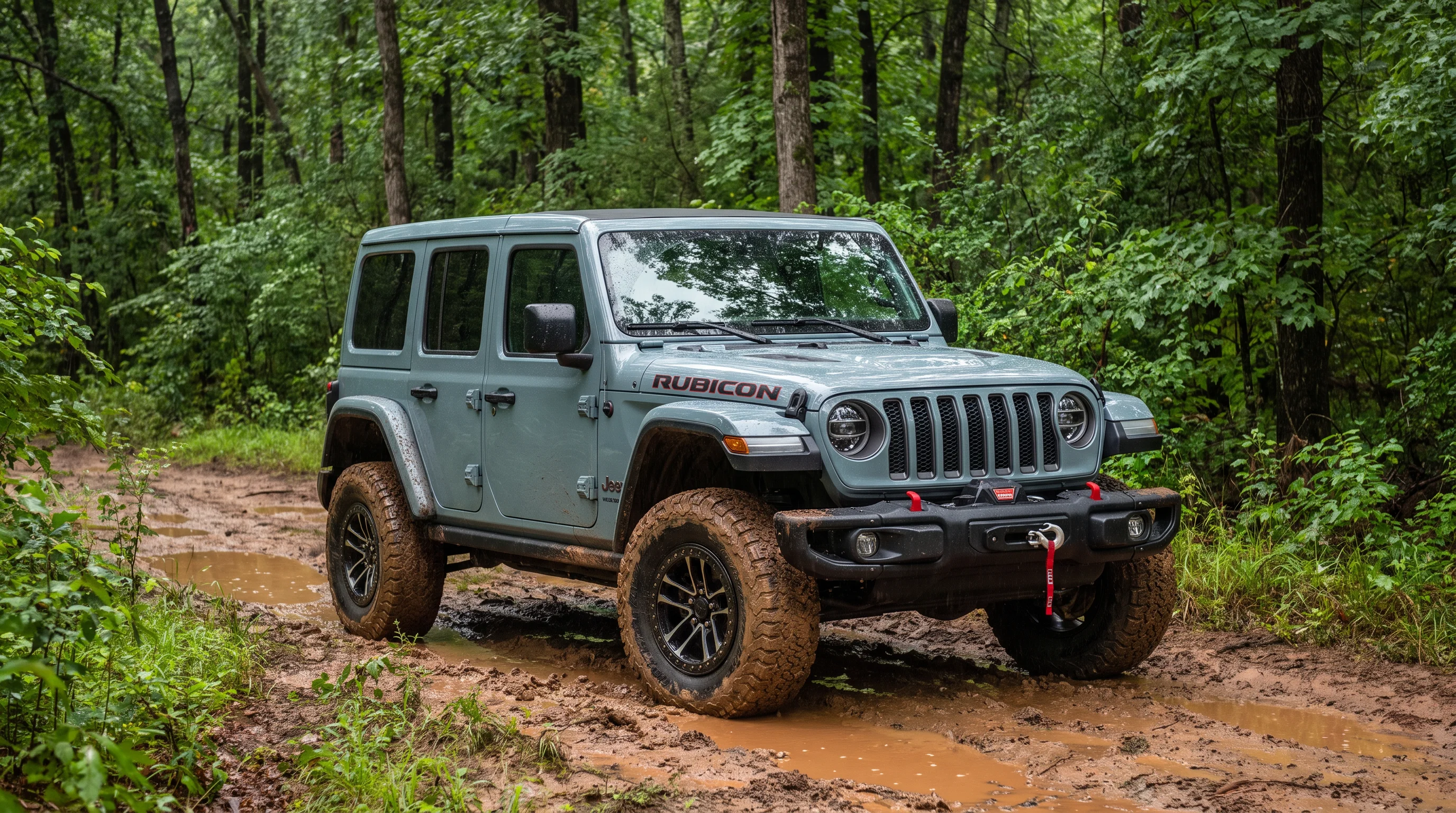
Leveling Kit vs. Lift Kit: How Much Lift You Get on a Ram 1500 or Jeep Wrangler
A standard leveling kit provides 1.5 to 2.5 inches of front-end lift, bringing the front bumper up to the rear ride height. A full suspension lift kit raises both front and rear suspension by 2 to 6 inches or more. Leveling kits eliminate factory rake so a truck can clear larger all-terrain tires. Suspension lifts increase frame clearance and suspension travel for bigger off-road obstacles.
Truck manufacturers design half-ton pickups with a factory rake, positioning the rear 1.5 to 2.5 inches higher than the front. That forward tilt lets the chassis sit level when hauling heavy payload or pulling a trailer. A front leveling kit uses strut coil spacers or adjustable leveling shocks to raise only the front end, leaving the rear suspension at factory height.
Full suspension lift kits replace primary suspension components across both axles. A complete kit includes taller coil springs or strut assemblies, modified control arms, extended sway bar links, and recalibrated shocks.
Mopar engineers vehicle-specific 2-inch Jeep Performance Parts lift kits for Wrangler and Gladiator models. Each kit pairs taller springs with specially tuned Bilstein 46-millimeter monotube shocks, longer front lower control arms, and bump stop extensions. Drivers heading out along the rocky terrain and sandy washes near Homestead Valley often choose suspension lifts to gain extra frame clearance over rugged desert trails.
One thing neither kit changes is what the vehicle is rated to carry or pull. Because a leveling kit leaves the rear suspension untouched, factory payload and towing ratings stay exactly where they were, unchanged rather than increased.§
| Comparison Point | Leveling Kit | Suspension Lift Kit |
|---|---|---|
| Front lift | 1.5 to 2.5 inches | 2 to 6 inches or more |
| Rear lift | None — factory rear height retained | Raised along with the front |
| Components replaced | Strut coil spacers or adjustable leveling shocks | Coil springs or strut assemblies, control arms, sway bar links, shocks |
| Tire clearance gained | Roughly one tire size over stock — up to 33-inch all-terrain tires on a half-ton | 33-inch to 35-inch all-terrain tires, depending on vehicle and lift height |
| Typical shop time | 2 to 4 hours | 4 to 14 hours, depending on height and components |
| Four-wheel alignment | Required immediately after installation | Required immediately after installation |
| Effect on factory ratings | Unchanged — payload and towing stay as built§ | Unchanged — payload and towing stay as built§ |
Maximum towing and payload capacity figures are based on properly equipped vehicles and vary by configuration. Do not exceed any weight rating. See your owner's manual and the vehicle's door-jamb label for specific capacities.
Choosing between a leveling kit and a suspension lift depends on how the vehicle gets used every day. Drivers who want an even stance and clearance for moderately larger tires usually find a front leveling system is enough. Owners planning rock crawling or serious off-road driving benefit from the articulation and axle movement a multi-inch suspension lift delivers.
Cited Source: Mopar Jeep Performance Parts — Jeep Performance Parts lift kit contents and vehicle applications | Bilstein — Jeep Performance Parts 2-inch lift kit with 46 mm monotube shocks | Les Schwab and Rough Country — leveling kit and lift kit function, and the effect on factory ratings
Can a Leveled Ram 1500 Handle Light Off-Road Trails?
A leveled Ram 1500 handles light off-road trails, unpaved fire roads, and desert washouts when it is paired with appropriate all-terrain tires. Raising the front suspension 1.5 to 2.5 inches lifts the front bumper, helping it clear rocks, ledges, and steep incline transitions without scraping.
Because a front leveling kit retains the factory rear springs and shocks, rear axle ground clearance stays unchanged until larger tires go on. Equipping a leveled Ram 1500 with 33-inch all-terrain tires raises the lowest points of the vehicle, including the rear differential housing and front skid plates, away from trail obstacles.
Cited Source: Les Schwab — leveling kit front-end function and ride characteristics | Rough Country and SDWheel — tire clearance gained from a leveling kit on a half-ton
How a Lift Kit Affects Towing on a Ram 1500 or Jeep Gladiator
Installing a suspension lift or leveling kit does not increase factory towing capacity, and it can reduce real-world towing stability if suspension geometry goes uncorrected. Tow ratings are set by the vehicle as engineered and built, and adding suspension height does not change them.§
Raising a vehicle elevates its center of gravity. That changes how weight transfers during braking and cornering with a trailer behind you. Adding a lift kit also changes the angle between the hitch receiver and the trailer tongue, which can cause excessive trailer sway if a proper drop-hitch mount is not used.
Lifting changes how the suspension handles load, so heavy tongue weights can produce more noticeable rear-end squat than a stock setup. Rear air helper springs, weight-distribution hitches, or upgraded heavy-duty shocks help keep the ride stance level when pulling travel trailers or utility loads.§
Maximum towing and payload capacity figures are based on properly equipped vehicles and vary by configuration. Do not exceed any weight rating. See your owner's manual and the vehicle's door-jamb label for specific capacities.
Cited Source: Rough Country — leveling and lift kits do not change factory towing, payload, GVWR or axle ratings
Shop Time and Parts Costs for a Lift or Leveling Kit
How long installation takes
Installing a complete suspension lift kit generally requires 6 to 14 hours of professional shop labor, while a basic front leveling kit takes 2 to 4 hours. Labor time varies with suspension complexity, whether the vehicle uses independent front suspension or solid axles, and how many secondary components are replaced.
Basic front leveling kits use strut top spacers or coil spring pre-load spacers. These require partial disassembly of the front strut towers and sway bar end links, which keeps labor between 2 and 4 hours.
A complete 2-inch to 2.5-inch spring-and-shock kit runs roughly 4 to 6 hours. Larger 3.5-inch to 4-inch kits, where technicians also fit control arms, track bars, drop brackets, and extended brake lines, run 8 to 14 hours, and the most involved builds can reach 20.
What the parts cost
| Kit Type | Typical Shop Hours | Typical Parts Cost |
|---|---|---|
| Front leveling kit — strut or coil spring spacers | 2 to 4 hours | $100 to $400 |
| Complete suspension lift kit — 2 to 2.5 inches, springs and shocks | 4 to 6 hours | $600 to $1,500 |
| High-performance lift system — 3.5 to 4 inches, control arms, track bars, remote-reservoir shocks | 8 to 14 hours, up to 20 on the most involved builds | $1,800 to $3,500 and up |
The figures above are typical industry ranges rather than Joshua Tree CDJR pricing. Pricing depends on your vehicle, the kit you choose, and the components that come with it.
Factory-engineered solutions such as the Mopar 2-inch Jeep Performance Parts kits provide vehicle-matched coil springs and tuned shocks designed to preserve ride quality. Every lift or leveling kit installation also requires a four-wheel alignment immediately after assembly. That resets steering angles and prevents uneven tire wear, and our wheel alignment service guide covers what the appointment involves.
Cited Source: Published installation-shop labor and parts pricing surveys, 2026
Tire Size, Ground Clearance, and Geometry Correction
What tire sizes each setup clears
Fitment depends on the vehicle. On a Jeep Wrangler, the Mopar 2-inch lift kit clears up to 35-inch tires with standard fender flares, or 37-inch tires with Rubicon high-top flares. On a half-ton like the Ram 1500, a leveling kit typically buys one tire size, up to 33-inch all-terrain tires, while 35-inch tires generally call for 4 to 6 inches of lift. There is no universal rule that a given lift height equals a given tire size.
A suspension lift raises frame rails and body panels, but true ground clearance under the axle differentials comes from overall tire diameter. The differential sits one tire radius above the ground no matter how much the body is lifted, so only half of any diameter increase reaches the ground. Going up roughly four inches in tire diameter adds about two inches of clearance beneath the lowest axle components.
Why geometry correction matters
Lifting shifts control arm angles, track bar geometry, and driveshaft alignment away from factory specification. Without geometry correction brackets or adjustable control arms, a lifted truck can lose caster and begin wandering at highway speeds. Correction brackets restore control arm pivot points closer to horizontal, maintaining proper caster angles, straight-line tracking, and smooth driveshaft rotation. That is exactly why the Mopar kits ship with longer front lower control arms.
Choosing shocks for a lifted suspension
Shock selection directly influences how a lifted suspension controls spring rebound and chassis roll.
- Strut spacers — Retain factory shocks by placing spacers on top of the strut tower, ideal for budget-conscious leveling setups.
- Leveling struts — Replace factory struts with height-adjustable units, delivering increased suspension travel and improved valving.
- Monotube shocks — Use high-pressure gas charges to dissipate heat during off-road cycling, preventing shock fade on washboard roads.
- Remote-reservoir shocks — Offer expanded oil capacity for severe trail conditions and heavy articulation.
Cited Source: Mopar Jeep Performance Parts — Wrangler JL kit tire fitment and longer front lower control arms | Rough Country and SDWheel — half-ton lift-to-tire-size guidance | Overlanding Tools and Automotto — the half-diameter rule for axle ground clearance
Frequently Asked Questions About Jeep and Ram Lift Kits
Does installing a lift kit void my Ram or Jeep factory warranty?
Installing a lift kit or aftermarket suspension component does not automatically void an entire vehicle warranty. Under the federal Magnuson-Moss Warranty Act, a manufacturer cannot void your warranty simply because an aftermarket part was installed. To deny a specific claim, the manufacturer or dealer must show that the part caused the failure. Using factory-engineered components such as Mopar lift kits and having the work completed by qualified technicians helps protect your existing warranty terms.‖
This information is provided for general educational purposes only and does not constitute legal advice. Warranty coverage depends on the specific terms of your vehicle's warranty agreement. Consult your owner's manual or a qualified legal professional for guidance on your individual situation.
Cited Source: Federal Trade Commission — consumer alert on aftermarket parts and warranty coverage
Do you need an alignment immediately after installing a leveling kit or suspension lift?
Yes. A comprehensive four-wheel alignment immediately following any lift or leveling kit installation is essential. Altering ride height changes suspension geometry. Toe-in, caster, and camber angles all shift, and the steering wheel centerline moves off-center. Driving without post-installation alignment correction causes rapid tire wear, loose highway handling, and compromised steering safety.
Cited Source: Published installation-shop alignment practice, 2026 — alignment is performed with every lift and leveling kit installation
What is the maximum lift height allowed for street legal driving in California?
California does not set a single maximum lift height. Instead, the standards depend on gross vehicle weight rating, frame and body floor height, and the resulting bumper and headlight elevations. A modified vehicle must keep its headlights and taillights within state-mandated vertical height limits while retaining all original factory emissions equipment. Verify that your planned lift height and tire outer diameter comply with California vehicle code standards before installation.
Cited Source: California Vehicle Code §24008.5 — frame height and body floor height limits by gross vehicle weight rating | California Vehicle Code §24400 — headlamp mounting height limits
Does a leveling kit change the ride height of the rear suspension?
No. A standard front leveling kit does not alter rear suspension height. Leveling kits are designed specifically to raise the front suspension by 1.5 to 2.5 inches to match the factory rear elevation, eliminating the forward rake built in by the manufacturer. If you need additional rear clearance or supplemental load support, a full suspension lift kit or auxiliary rear leaf springs is the right choice.
Can larger tires fit on a Jeep Wrangler or Ram 1500 without installing a lift kit?
Stock Jeep Wrangler and Ram 1500 models can accommodate slightly larger tires. Fitting 33-inch or 35-inch all-terrain tires without modification, though, often causes tire rub against the inner fender liners and the sway bars during tight turns. Adding lift creates the wheel well clearance needed to cycle larger tire diameters safely through full suspension travel. Customers at our 57909 29 Palms Hwy location regularly ask whether leveling lifts the rear end. Our team can show you on the floor how front leveling spacers raise the front bumper to match the factory rear height.
Cited Source: Mopar Jeep Performance Parts — Wrangler JL factory tire clearance and lift kit fitment
Upgrading Your Jeep or Ram Suspension with Dealer-Backed Care
Selecting the right suspension modification means balancing off-road clearance, highway ride quality, towing demands, and component durability. That applies whether you need a simple front leveling kit for 33-inch all-terrain tires or a complete suspension lift with geometry correction brackets for desert exploration. Professional component selection keeps your truck or SUV performing safely.
Our factory-trained service team understands suspension geometry, drive axle angles, and post-installation alignment requirements for Chrysler, Dodge, Ram, and Jeep vehicles. Installing engineered parts helps maintain steering precision, protects drivetrain health, and preserves vehicle durability across thousands of miles.
To explore suspension options, order Mopar suspension parts, or schedule a professional installation consultation, reach our service team in Yucca Valley at (760) 369-8997.
The information in this article is general guidance and does not constitute a specific diagnostic or repair recommendation for any individual vehicle. Repair and maintenance decisions should be made in consultation with a certified technician based on the specific condition of your vehicle.
Cited Sources
- Mopar Jeep Performance Parts — Jeep Performance Parts lift kit contents, vehicle applications and tire fitment
- Bilstein — Jeep Performance Parts 2-inch lift kit with 46 mm monotube shocks
- Federal Trade Commission — consumer alert on aftermarket parts and warranty coverage
- California Vehicle Code §24008.5 — frame height and body floor height limits by gross vehicle weight rating
- California Vehicle Code §24400 — headlamp mounting height limits
- Les Schwab, Rough Country and SDWheel — leveling and lift kit function, effect on factory ratings, and half-ton lift-to-tire-size guidance
- Overlanding Tools and Automotto — the half-diameter rule for axle ground clearance
- Published installation-shop labor, parts pricing and alignment practice surveys, 2026
Disclaimers
§ Maximum towing and payload capacity figures are based on properly equipped vehicles and vary by configuration. Do not exceed any weight rating. See your owner's manual and the vehicle's door-jamb label for specific capacities.
‖ This information is provided for general educational purposes only and does not constitute legal advice. Warranty coverage depends on the specific terms of your vehicle's warranty agreement. Consult your owner's manual or a qualified legal professional for guidance on your individual situation.
The information in this article is general guidance and does not constitute a specific diagnostic or repair recommendation for any individual vehicle. Repair and maintenance decisions should be made in consultation with a certified technician based on the specific condition of your vehicle.