
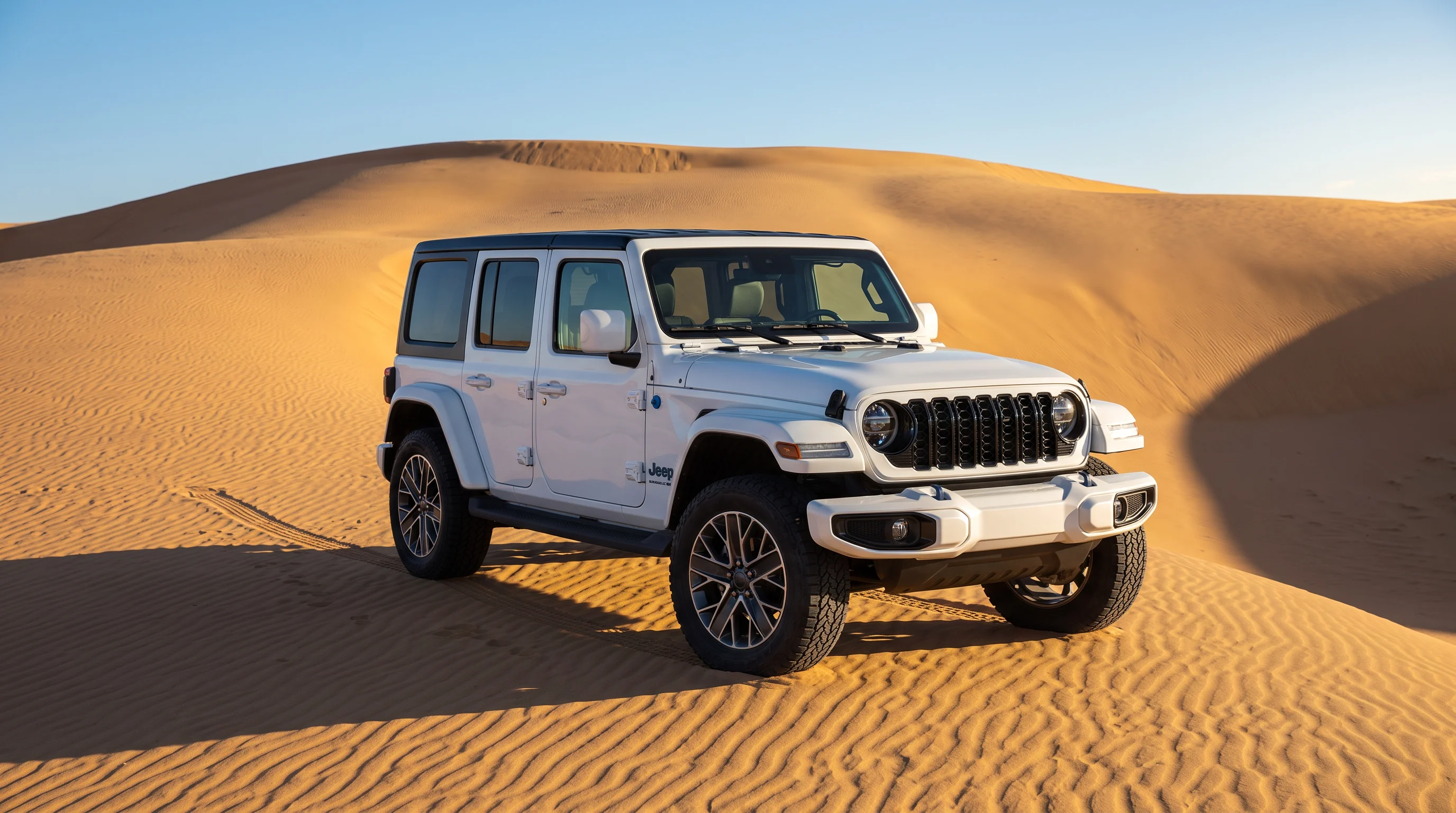
Desert All-Terrain Tires in Yucca Valley: How to Choose, Air Down, and Recalibrate
Choosing the right all-terrain tires for desert driving comes down to three things: tread pattern design, sidewall durability, and proper pressure management. Whether you are floating across loose sand, crawling over sharp rock, or cruising local highways, the tires under your vehicle decide how much of the high desert you can actually reach. This guide covers what to look for, how far to air down, how desert heat moves your pressures, and what has to happen inside your vehicle’s computer when you size up.
Which Tire Type Performs Best in Deep Desert Sand?
All-terrain tires outperform deep mud-terrain tires in dry desert sand because their tighter tread voids and broader contact patch provide flotation on top of loose sand rather than digging down into it.
Driving in soft, dry sand requires flotation, not aggressive digging. Mud-terrain tires use wide open tread voids designed to clear heavy mud, and those deep paddle-like lugs act like shovels in sand. Instead of propelling the vehicle forward, a mud tire digs trench lines beneath the wheels and quickly high-centers the frame on the crest of a dune. All-terrain tires use interlocking tread blocks and narrower voids that spread vehicle weight more evenly across the sand surface.
How Low to Air Down for Sand
Maximum sand traction depends heavily on lowering inflation pressure. For deep sand and dune driving, reducing pressure to 12 to 15 PSI on standard, non-beadlock wheels allows the tire carcass to flex outward, expanding the footprint in both length and width. That enlarged contact patch reduces ground pressure per square inch, letting a four-wheel-drive rig float over soft sand washes instead of sinking into them.
Low pressure comes with rules. At 12 to 15 PSI, avoid sharp, high-speed cornering, which can unseat the tire bead from the wheel rim. Reinflate to your normal street pressure before returning to paved highways, because soft tires at highway speed build heat quickly. If you are planning trail and backcountry driving, air down at the staging area rather than once you are already bogged.
Cited Source: Off-Road.com — recommended off-road tire pressure by terrain | MetalCloak — airing down and bead-unseating guidance
What to Look for in a High-Desert All-Terrain Tire
The best all-terrain tires for high-desert trails use 3-ply sidewall construction, cut-and-chip resistant tread compounds, and aggressive shoulder lugs that resist rock damage.
High-desert driving means coarse, decomposed granite and jointed granite boulders with a sandpaper-like surface texture, all of which chew through standard passenger tires. Four construction features do the protecting.
- 3-ply sidewall — Three full synthetic fabric layers inside the sidewall help prevent pinch flats, punctures, and slice damage when crawling over sharp rock or running low pressure.
- Silica compound — Cut-and-chip resistant resin additives keep tread blocks from chunking or tearing away on sharp granite edges.
- Load Range E — A 10-ply rating equivalent, delivering maximum carcass stiffness and puncture resistance under heavy loads.
- Shoulder lugs — Aggressive tread elements wrap down the upper sidewall to generate lateral bite when climbing out of deep ruts or squeezing between boulders.
Load Range C vs. Load Range E
Both figures are ply rating equivalents, not counts of actual fabric layers. Load range and sidewall ply count are also independent of each other — some Load Range E all-terrains use a two-ply sidewall, and some Load Range C tires use three.
| Attribute | Load Range C | Load Range E |
|---|---|---|
| Ply rating equivalent | 6-ply rated | 10-ply rated |
| Ride quality | Softer, more compliant | Slightly firmer on pavement |
| Built for | Lighter vehicles | Heavy towing, maximum puncture resistance |
| Maximum cold inflation pressure | 50 PSI | 80 PSI |
| Typical application | Light trucks, smaller SUVs, mid-size trailers | Three-quarter-ton and one-ton trucks, heavy SUVs, large trailers |
| Desert trail protection | Moderate | Superior sidewall protection on sharp rock |
Cited Source: Tire Grades — load range, ply rating equivalents and maximum cold inflation pressures | Tire Reviews — measured sidewall ply counts across Load Range E all-terrains | U.S. Geological Survey and National Park Service — geology and rock types of the Joshua Tree area
How Often Should You Check Tire Pressure in Desert Heat?
Check tire pressure at least once a month with the tires cold, because severe ambient heat expands the air inside and hides gradual pressure loss.
In high-desert climates, ambient temperature plays an outsized role in pressure behavior. Pressure moves roughly 1 PSI for every 10 degrees Fahrenheit of temperature change, in both directions. During peak summer, asphalt surface temperatures can exceed 140 degrees Fahrenheit, which heats the air inside a rolling tire significantly. That heat-induced expansion can fool a driver into believing the tires are properly inflated when the cold pressure is actually dangerously low.
Checking inflation requires cold tires, meaning the vehicle has been parked for at least three hours or driven less than one mile. The correct baseline PSI is printed on the driver-side door jamb placard, not the maximum inflation figure molded into the tire sidewall. Underinflated tires generate excessive friction and flex, and combined with blistering summer pavement that leads to rapid heat accumulation, tread separation, and sudden blowouts.
Modern vehicles include a Tire Pressure Monitoring System, but TPMS is a backup, not a substitute for a gauge. The federally mandated warning triggers only once pressure falls 25 percent or more below the placard figure, which is well past the point where handling, wear, and heat resistance have already suffered. Pressure checks sit alongside the rest of our routine maintenance guidance for desert driving.
Desert Tire Pressure Quick Reference
| Item | Figure |
|---|---|
| Routine check interval | At least monthly, tires cold |
| “Cold tires” defined | Parked three or more hours, or driven less than one mile |
| Correct baseline PSI | Driver-side door jamb placard, not the sidewall maximum |
| Pressure change per 10°F | About 1 PSI |
| Peak summer asphalt surface temperature | 140°F and above |
| Deep dry sand, non-beadlock wheels | 12 to 15 PSI, reinflate before pavement |
| TPMS warning trigger | 25 percent or more below placard pressure (FMVSS 138) |
Cited Source: NHTSA — FMVSS No. 138, 25 percent under-inflation warning threshold | Continental Tire — cold-check procedure and temperature effect on pressure
Buying and Installing All-Terrain Tires in Yucca Valley
Professional mounting and balancing protects tread life, ride quality, and highway safety, and what it costs depends on wheel diameter, tire size, and wheel material.
What a Professional Installation Includes
A standard installation covers more than slipping rubber onto a rim. It includes removing the old tires, mounting the new beads, high-speed dynamic balancing with weight placement, and replacing rubber valve stems or servicing the internal TPMS sensors. Larger off-road fitments on heavy-duty wheels take more time and more specialized equipment, because heavy tread blocks are harder to balance properly.
When to Get an Alignment
Dynamic balancing is what eliminates the speed vibration that degrades ride comfort and accelerates suspension wear. An alignment check is worth pairing with new tires as well. Mopar recommends having wheels realigned in any of these situations:
- The vehicle pulls to the right or left while driving
- The steering wheel is off center or feels unstable, or vibration is felt through the wheel or seat
- Tires show uneven wear
- Wheels squeal on turns
- After an accident or a hard pothole strike
- After steering or suspension parts are replaced
Our Mopar parts and service center handles mounting, balancing, and alignment under one roof.
The information in this article is general guidance and does not constitute a specific diagnostic or repair recommendation for any individual vehicle. Repair and maintenance decisions should be made in consultation with a certified technician based on the specific condition of your vehicle.
Cited Source: Mopar — tire rotation, balancing, and alignment guidance
What Larger Tires Do to Your Speedometer and Transmission
Installing larger all-terrain tires increases the rolling circumference of your wheels, which causes the speedometer to read lower than your actual ground speed until the vehicle is recalibrated.
A taller tire covers more distance with every revolution, so the speedometer and odometer register fewer rotations than the distance you actually travel. A factory tire turns a specific number of times per mile, and the vehicle’s computer uses that figure to calculate speed, distance, and transmission shift scheduling. The resulting error tracks the diameter change almost exactly: a tire 3 to 7 percent taller than stock leaves a speedometer reading 65 mph when true road speed is roughly 67 to 70 mph.
The consequences go past the gauge. Automatic transmission shift points rely on wheel speed data, so shifts can be delayed when the computer assumes the vehicle is moving slower than it is. Traction control and anti-lock braking systems also monitor differences in wheel rotation speed.¶ Every vehicle is programmed for the tire diameter it left the factory with, which is why stepping outside that size calls for diagnostic recalibration. Technicians use dealership diagnostic software to update the tire size parameter so speedometer readings, mileage tracking, and shift behavior all return to normal.
¶ Driver-assist and safety systems are supplemental aids and are not a substitute for safe, attentive driving. Their effectiveness depends on weather, road, and traffic conditions and other factors. Always obey traffic laws and stay attentive to the road. See your owner's manual for system details and limitations.
Cited Source: Performance Plus Tire — speedometer error and tire diameter calculation
Common Questions About Desert All-Terrain Tires
Does lowering tire pressure for desert sand driving damage the sidewalls?
Lowering pressure to 12 to 15 PSI for soft sand does not damage sidewalls if you drive at slow, controlled speeds. Running low pressure at high speed or making sharp, aggressive turns can generate excessive heat flex or unseat the bead from the rim, which can damage the tire structure. Always reinflate to recommended street pressure before returning to paved highways.
Why does my TPMS light turn on during cold desert mornings and turn off later?
Air contracts in cold weather, dropping pressure by about 1 PSI for every 10 degree temperature drop. Cold morning air can push marginal tire pressure below the TPMS warning threshold. As temperatures rise or the tires warm up during driving, the air expands and the light goes out. You should still set cold inflation to match the door jamb placard rather than waiting for the light.
Can I install larger all-terrain tires without lifting my suspension?
Minor size increases often fit stock 4x4 suspensions without rubbing. Significantly larger tires require a suspension lift or high-clearance fender flares to keep tread from contacting fender liners and sway bars during full suspension articulation.
How often should all-terrain tires be rotated when driving on abrasive desert roads?
Mopar recommends rotating tires every 6,000 to 8,000 miles, or sooner if uneven treadwear develops. For most Mopar vehicles the recommended pattern is front-to-rear, and on a model with a full-size spare such as the Jeep Wrangler, the spare can be worked into the rotation. Abrasive desert gravel and rock cause irregular wear on aggressive shoulder blocks, so consistent rotation matters more out here than it does on pavement. Your owner’s manual sets the official interval for your vehicle.
Rotation, balancing, and recalibration are all handled by Jeep service at our Yucca Valley shop.
Get Expert Desert Tire Advice at Joshua Tree CDJR
Whether you are running loose sand, crawling sharp rock, or putting daily miles on local highways, the right tire protects your vehicle and expands where it can take you. Our service team at Joshua Tree CDJR can help you select, mount, balance, and recalibrate the right setup for how you actually drive. Find us at 57909 29 Palms Highway in Yucca Valley.
Cited Sources
Off-Road.com — off-road tire pressure by terrain | MetalCloak — airing down and bead-unseating guidance | Tire Grades — load range, ply rating equivalents and maximum cold inflation pressures | Tire Reviews — measured sidewall ply counts across Load Range E all-terrains | U.S. Geological Survey and National Park Service — geology of the Joshua Tree area | NHTSA — FMVSS No. 138, 25 percent under-inflation warning threshold | Continental Tire — cold-check procedure and temperature effect on pressure | Mopar — rotation, balancing, and alignment guidance | Performance Plus Tire — speedometer error and tire diameter calculation
Disclaimers
The information in this article is general guidance and does not constitute a specific diagnostic or repair recommendation for any individual vehicle. Repair and maintenance decisions should be made in consultation with a certified technician based on the specific condition of your vehicle.
¶ Driver-assist and safety systems are supplemental aids and are not a substitute for safe, attentive driving. Their effectiveness depends on weather, road, and traffic conditions and other factors. Always obey traffic laws and stay attentive to the road. See your owner's manual for system details and limitations.